Tuesday, 7 July 2020

Lower Cretaceous fossils from the Speeton Clay Formation

After visiting Bempton we moved on to Speeton ...lots of belamnites and ammonites...


Scratting in the clay...glad it was dry! 


Belamnites....


Ammonite.


The detail.....The Speeton Clay Formation is a highly fossiliferous formation that yields a wide range of Lower Cretaceous fossils. 

Simbirskites ammonite.


Hibolites jaculum (and others) and Acroteuthis lateralis belemnite rostrums.


Serpula worm cast scars on an Hibolites jaculum belemnite rostrum.

 
Exogyra oysters, commonly confused with Gryphea (also found in the Speeton Clay Formation).


Pyritised burrows (<3mm length) in in the Speeton Clay.

Monday, 6 July 2020

Gannets at Bempton

A few pics of gannets from Saturday's trip.


Bempton Cliffs RSPB Reserve

With a dire weather forecast for Cumbria we decided, being as we legally could (Lockdown release!) and the forecast was better, head to the northeast and stop over near Robinhoods Bay. On the way we stopped at Bempton. There was a major twitch on, as a black-browed albatross had been present the previous two days, so there were plenty of people around - but all very pleasant and socially distanced where possible. It did mean everyone was just peering out to sea allowing us our own private viewing of a long-eared owl- fantastic to see. The cliffs were covered with the usual species and the gannets were, as always the highlight - see the next blog.

Bempton seabird cliffs


Gannets.

Razorbill.

Guillemot and razorbills.

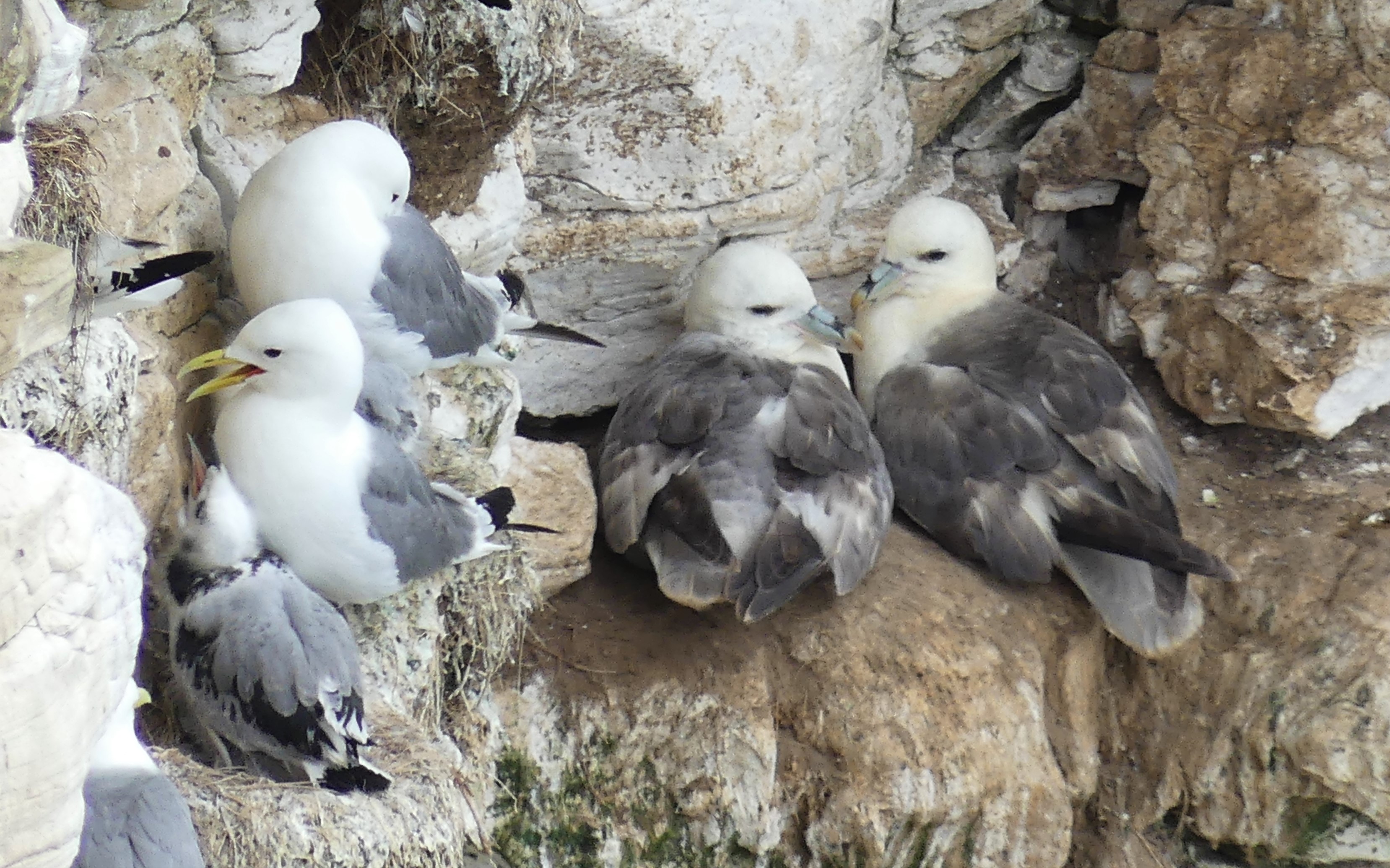
Kittiwakes and fulmars.

Puffin.

Long-eared owl.


Sunday, 5 July 2020

Little Mell Fell

With so many photos from  this weekend to process it was a relief to realise that I hadn't blogged last Thursday evening's walk ...far simpler! A short trip up Little Mell Fell and some splendid views! Now to crack on with photo editing - watch this space for the weekends pics!

Rocky on the summit.

Over looking Ullswater.

Spectacular light ...and we stayed dry!

Superb views....

Towards High Street.

Friday, 3 July 2020

Pyramidal orchid gelli prints

With the wet weekend I took time to do some gelli printing...I'm still searching for a way to take designs forward, but may give these a go in glass.....watch this space.


Thursday, 2 July 2020

Lamonby verges flora

Another visit to see  the changes at this fabulous site. The bird's-eye primrose has gone and there are plenty of common spotted orchids and twayblades out - the greater burnet and meadow sweet are just coming out as are the fragrant orchids. There were dog roses and ragged robin and plenty of buttercups in the adjacent fields ...the weather was not especially nice, so the painting was done inside after we had returned.


Burnet moth, fragrant orchid sp. and bee on a common spotted orchid.


Meadow brown and ringlet.

The resultant watercolour .

Wednesday, 1 July 2020

Common Twayblades

Tom had a quick trip up to Headend Quarry this afternoon, before the rain, in search of orchids. While the chalk fragrants and common spotted orchids are at their best, the highlight was certainly the common twayblades!

One individual was deformed, with some flowers being double headed with fully formed flowers (including sepals, petals and lips), except the stem and ovaries that were fused together. Other flowers on the individual were similar, in being double headed, except not all were fully fused. 

Double flowered individual.

While these deformities are one-off oddities, a named variant can also be found at Headend Quarry- var. trifoliata. While not uncommon, var. trifoliata is an interesting plant, with three leaves instead of the characteristic two. 

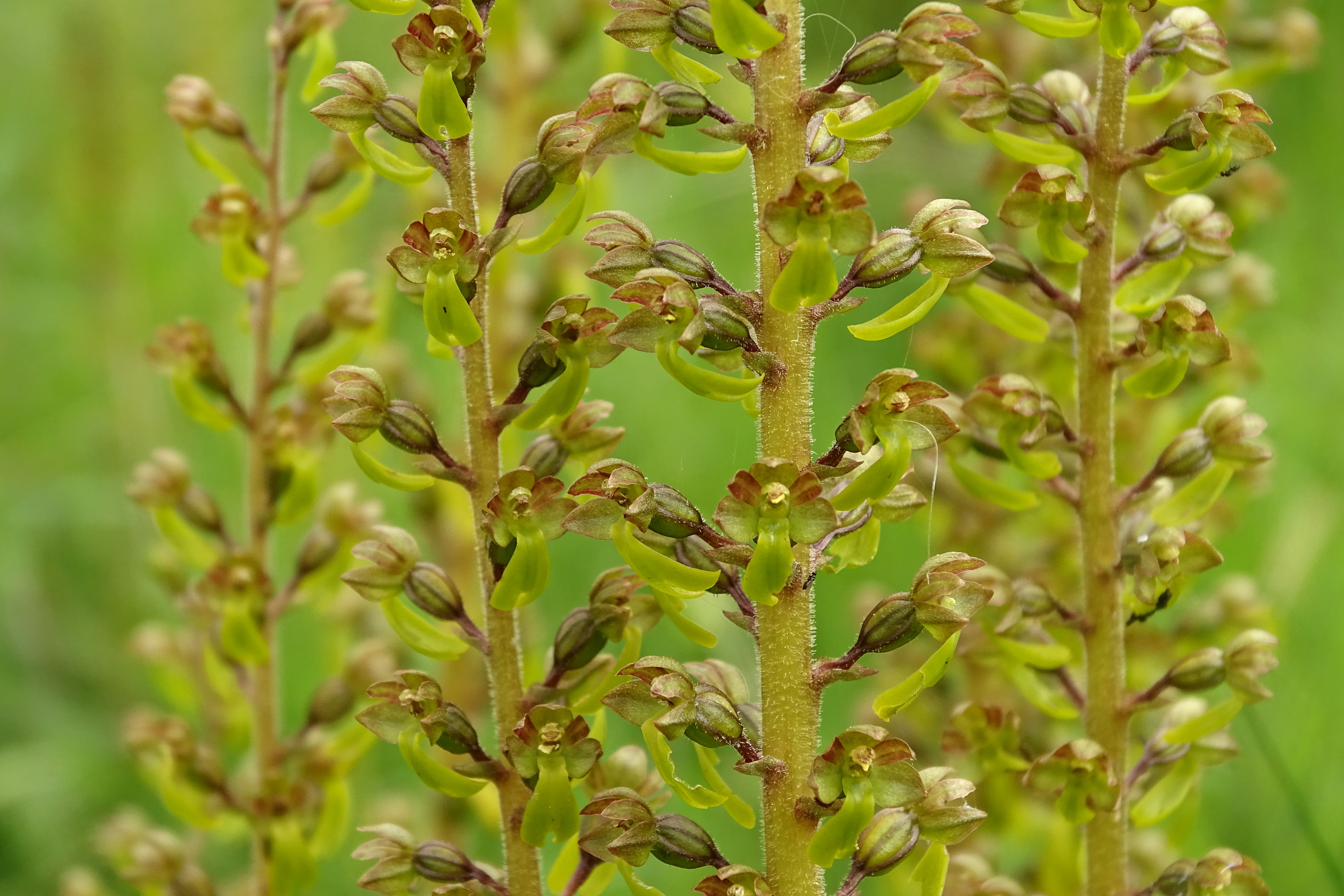
Also observed was the pollination of the common twayblade. Common twayblades are pollinated by ichneumon wasps, along with some other small insects such as sawflies. After being attracted by the flower's scent, the ichneumons would follow the nectar filled groove on the lip (seen in the images below as the dark streak up the center of the lip) to the pollinia which are then stuck to the wasp's head by the secretion of a sticky liquid. This can also be seen in the photographs below as a pale yellow blob (the pollinia) on the ichneumon's head.

Visiting ichneumon.

A different species of visiting ichneumon.

More ichneumon pollination.

As well as variation in the number of leaves and flower odities, common twayblades come in a surprisingly large number of colours, from pale, almost yellow lipped individuals, to very dark brown petaled.


A variety of colours.

The common twayblades, while understated, are spectacular, especially when there are large stands of them, standing tall above the lower vegetation. The number of plants has dramatically increased at the quarry, likely as a result of increasing vegetation making the habitat more suitable. However, this increase in vegetation and lack of management has also lead to the likely (functional) local extinction of the frog orchid. Only one individual was found last year -click here-, and it has not flowered this year. ...and some more twayblade photos...